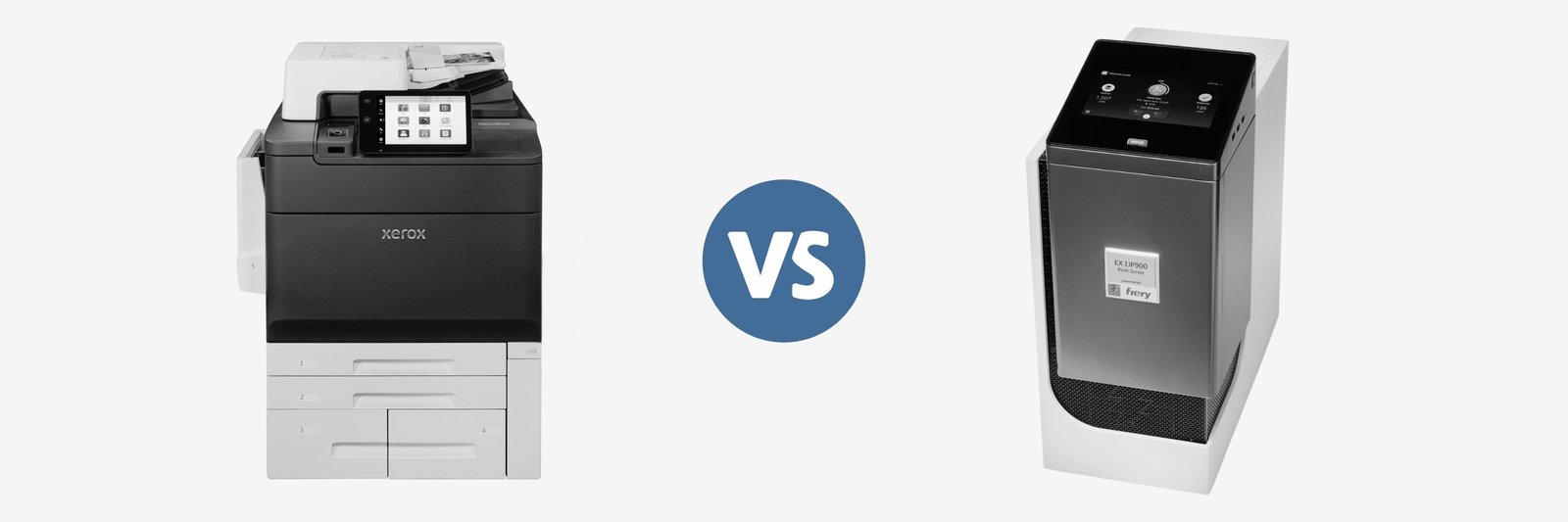
Xerox DocuShare vs. Google Drive: Which Is Right for Your Business?

Submitted by Byanka Ramos on

It’s not always the number of files that slows teams down, but rather the chaos that comes with them. Maybe you’ve got invoices in one shared folder, HR docs in another, and half your team hoarding “final_v2” PDFs on their desktops. Sound familiar?

At some point, every growing business realizes that storing files and managing them are two different things.

If you’re comparing Xerox DocuShare vs Google Drive, you’re probably wondering: Do you just need a simple way to store and share documents, or do you need a full content management system that brings order, automation, and security to your workflows?

As a print vendor, we’ve specialized in print and document workflows for nearly 40 years. While we are proud Xerox partners and experts in DocuShare, our goal isn’t to sell you something. We want to help you find the right fit for your business, even if that’s not DocuShare.

So, let’s break it down.

5 Ways to Protect Your Printer from Cyberattacks 

Submitted by Karla Metzler on

You probably lock your phone with a passcode and protect your email with two-factor authentication. But when was the last time you thought about your office printer’s security?

In 2020, researchers at CyberNews hijacked nearly 28,000 printers during an experiment designed to test how exposed networked devices really are. What they discovered was alarming; hundreds of thousands of business printers were left wide open to attack.

For many offices, the printer is the last thing anyone worries about. But by leaving it unsecured, it becomes an entry point for hackers to access sensitive data.

At STPT, we’ve spent more than 35 years helping North Texas businesses protect their office technology. As print vendors and Xerox partners, we know firsthand how overlooked printers are when it comes to cybersecurity.

Servicing Your Own Machine? 4 Reasons Why It's a Bad Idea

Submitted by Matthew Eberhart on

When your office printer goes down, it can feel like the whole workplace grinds to a halt. Deadlines get pushed, employees hover around the machine pressing buttons, and someone eventually says, “How hard could it be to fix this thing?”

We know how tempting it is to roll up your sleeves and try to fix it yourself, especially when repair costs and downtime feel overwhelming. But printers aren’t like coffee machines or microwaves. They’re complex, high-voltage devices packed with delicate parts, specialized software, and very specific repair needs.

As a print vendor with decades of experience, we’ve seen many businesses try to handle repairs themselves. More often than not, this approach ends up costing more in the long run, both financially and in lost productivity.

In this blog, we’ll break down four big reasons why servicing your own printer or copier is a bad idea, and what you should be doing instead to keep your office equipment running smoothly.

Benefits of Investing in a Maintenance Plan for Your Multifunction Printer

Submitted by Keith Metzler on

It always happens at the worst possible moment. You’re minutes away from an important meeting, you hit “Print,” and the screen flashes an error code you’ve never seen before. Or the machine just sits there quietly mocking you. For businesses that rely on multifunction printers (MFPs) every single day, downtime can be costly.

In fact, many businesses don’t know their actual printing costs. Many are not aware of how much of their print spend is tied up in unplanned repairs, wasted supplies, and downtime that could have been avoided with the right service plan.

A maintenance plan is like insurance for your investment and peace of mind for your team. In this blog, we’ll walk you through why maintenance plans matter, what they cover, the costs of skipping one, and how easy it is to request service if you’re already covered.

Table of Contents

Is Print Management Software Right for Your School? (Pros and Cons)

Submitted by Byanka Ramos on

It’s a sad fact that most school budgets are tight. This makes it crucial that schools are careful about their spending. And, when it comes to school spending, printing-related costs can be some of the most draining. Every dollar spent on paper waste or untracked printing could be dollars better spent on classroom resources, technology upgrades, or student programs. In fact, studies show schools can spend as much as 1–3% of their annual budget on printing alone.

Given these costs, it’s understandable that school administrators and IT directors struggle to manage printing resources efficiently. Issues like toner closets filled with the wrong cartridges, staff printing unnecessary color copies, and printers frequently breaking down when teachers need them most can turn print management into a full-time job.

5 Steps to Make Your Office Cybersecure

Submitted by Matthew Eberhart on

What would happen if your office network went dark tomorrow? You would have no access to files stored in cloud, no way to email clients, and no printers to push through time-sensitive documents. For too many businesses, this is a reality. In fact, nearly six in ten companies report that cybersecurity incidents caused moderate to severe disruption in the past year.

And cyber threats don’t just affect big corporations. Small and mid-sized businesses are increasingly targeted because attackers know resources are limited and defenses are often patchy. With remote work, mobile devices, and cloud platforms expanding the “attack surface,” it’s easier than ever for hackers to find an entry point.

In-House Production Printing vs. Outsourcing: Which Is Right for Your Business?

Submitted by Byanka Ramos on

Think about the last time you had a deadline and were waiting for a print job to arrive. Maybe it was a batch of event brochures, training manuals, or direct mail pieces. You had the designs ready, the order placed, and then you waited, hoping there wouldn’t be a shipping delay, a misprint, or an unexpected rush fee. For many organizations, this back-and-forth raises a bigger question: Would it be better to invest in a production printer and bring this work in-house, or should we keep outsourcing?

It’s a decision businesses wrestle with more often than you might think. At STPT, we work with organizations of all sizes, from schools and churches to enterprise print shops, who are weighing this exact choice. The truth is, both in-house production printing and outsourcing have strengths and weaknesses. The right option depends on your volume, budget, priorities, and long-term plans.

4 Reasons Why Prices Change on Printers  

Submitted by Karla Metzler on
Video

Price fluctuation happens in almost every industry, and printers are no different.  

Whether you buy directly from a printer manufacturer or through a vendor, the price of machines can change at any given time.    

This is especially true under today’s current circumstances, where supply chains remain disrupted and inflation continues to rise across most sectors of society.   

As a local print vendor (and Xerox partner), we see these fluctuations up close. Customers often ask, “Why did this printer cost X last month and Y today?” That’s exactly what we’re here to answer.

To help you understand why printer prices fluctuate, we’ve identified four main reasons for these changes and how frequently they happen. We’ll also explain how buying from a retailer, a manufacturer, or a vendor makes a difference and provides practical steps to make smarter buying decisions.

4 Options You Have at the End of Your Printer/Copier Lease 

Submitted by Karla Metzler on
Video


So, you’re nearing the end of your lease agreement for your office’s printer/copier and want to know what your options are. 

Knowing your end-of-lease options is crucial. Consumers who ignore the upcoming end of their copier lease agreement can open themselves up to automatic lease extensions if they don’t notify their print vendor or provider in a timely fashion.  

This means you could be paying for a machine you no longer want for another year, resulting in frustration and financial burden to the tune of thousands of dollars.  

As a long-time print vendor, we’ve learned the importance of having a plan for when you come to the end of your lease. And since over 90% of our customers choose to lease their machines, we’ve had to assist a number of clients in their post-lease decision. 

The Best Printers for Pay-for-Print Shops (2025)

Submitted by Byanka Ramos on

Margins in the print industry are razor thin. According to IBISWorld, commercial printing revenue has declined at a CAGR of 2.8% to about $76.7 billion over the past five years. That doesn’t mean print is going away, but print shops need to get smarter about the equipment they invest in if they want to stay profitable.

For pay-for-print shops, choosing a production printer can make or break the business model. The right machine can handle a wide range of jobs quickly, keep per-page costs low, and open the door to higher-value services. The wrong one, on the other hand, can eat into margins, slow down turnaround times, or even limit what you can offer your customers.

Subscribe to